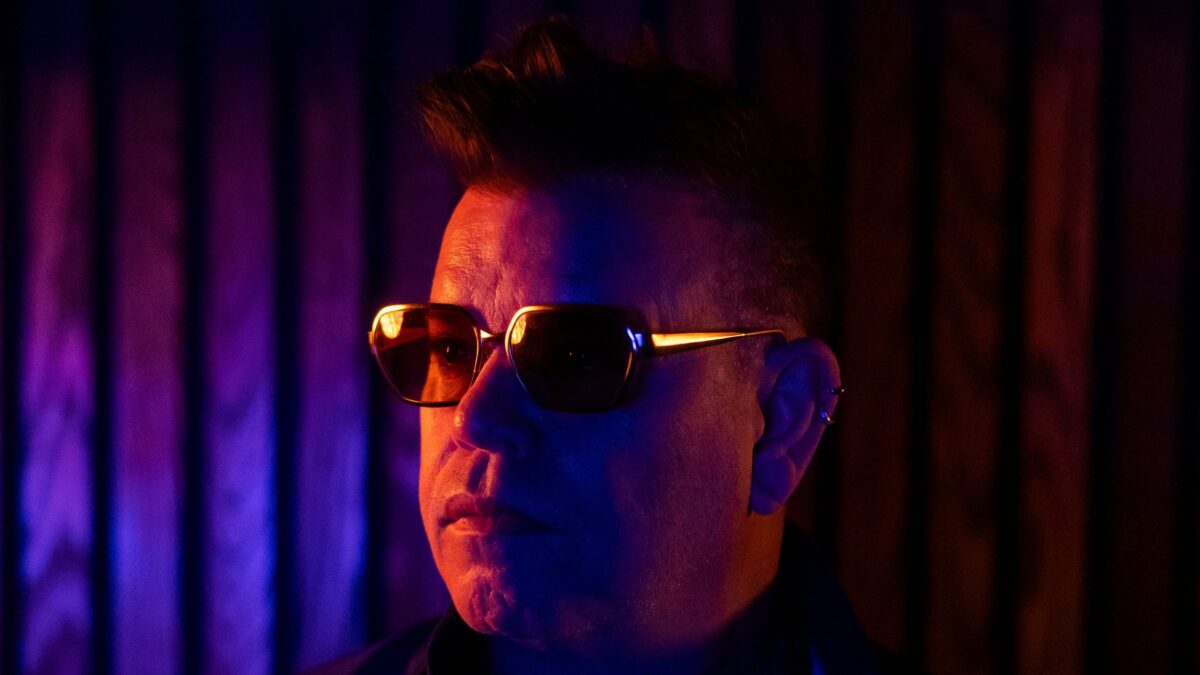
Paul Oakenfold + The Crystal Method
Liquid Todd
Thu, July 9, 2026
Doors: 7:00 pm
9:30 club
Washington, DC
Tickets are non-transferable until 72 hours prior to the show time. Any tickets suspected of being purchased for the sole purpose of reselling can be cancelled at the discretion of 9:30 Club / Ticketmaster, and buyers may be denied future ticket purchases for I.M.P. shows. Opening acts, door times, and set times are always subject to change.
Paul Oakenfold
“Pete T ong said it perfectly: getting a release on Perfecto is like a badge of honor,
” Paul
Oakenfold recalls.
“A dance music badge of honor! Those words really meant a lot to me as we
began to consider how to properly pay tribute to Perfecto’s first three decades as a record
label.
”
Pete T ong, of course, is dance music’s longtime tastemaker supreme – but don’t just take
T ongy’s word for it: in 2003, none other than the late Queen Elizabeth bestowed an award on
Oakenfold on behalf of the British Empire as a “Pioneer of the Nation” for his contributions to
dance music. All aspects of that legacy are coming together with “Perfecto 30”: an expansive
series debuting in 2023-2024 spanning unique global events, musical releases, and exclusive
artist/DJ performances that reflect not just 30-plus years of the Perfecto imprint’s success, but
the goalpost-moving achievements of Oakenfold, Perfecto’s co-founder and figurehead, as
well.
Indeed, it’s hard to separate Perfecto’s landmarks from Oakenfold’s storied history as arguably
the first global superstar DJ, paving the way from Ibiza and Glastonbury to Las Vegas
residencies; as a hitmaking producer for everyone from Happy Mondays to Madonna and U2; a
pioneer of contemporary electronic music soundtracks for games and hit Hollywood movies
like Swordfish and Bourne Identity; and an innovator of DJ culture across genres, crucial in
bringing underground club sounds from trance to EDM to a worldwide mainstream audience
(and that’s just a partial list).
“Paul’s attitude in starting Perfecto was quite visionary, quite
refreshing – I think he started a brand, really, that also happened to be a label,
” T ong notes in
the upcoming documentary Welcome to Perfecto.
“Perfecto 30 is really the umbrella for it all,
” Oakenfold explains. In addition to the release of
Welcome to Perfecto (which features additional commentary from the legendary likes of Fatboy
Slim, Carl Cox, T odd T erry and David Guetta, along with cultural perspective Mixmag’s Nick
Stevenson and DJ Times editor Carl Loben), Perfecto 30 will include a series of remixes and DJ
mix recordings featuring everyone Oakey OGs like Carl Cox to new jacks like Franky Wah.
Meanwhile, Oakenfold himself will make a series of special DJ appearances crisscrossing
America and the UK to Ibiza and Australia – many involving the parties, festivals, and superclub
brands where he made his fame; in them, he plans to revisit Perfecto classics and deep cuts
like PPK’s “ResuRection,
” Planet Perfecto’s “Bullet in a Gun,
” and his own smashes like “Starry
Eyed Surprise” (the hit collaboration with Crazy T own’s Shifty Shellshock from Oakenfold’s
platinum debut solo album, 2002’s Bunkka). Oakenfold also promises a special event at an
epic, unexpected venue where dance music has never been played before – considering he’s
been the first DJ to play Stonehenge and base camp at Mount Everest, this is no small
promise.
“All I can say is we’re looking at one of the oldest cathedrals in England,
” Oakenfold
notes with a mischievous smile.Oakenfold became known for performing at many of the most wondrous, unexpected sites in
the world. In addition to Stonehenge and Everest, he’s spun on the waterfront at the Sydney
Opera House, high up in Patagonia mountains, and at the “Party at the End of the World” that
was held in Argentina’s ancient Ushuaia rainforest. Oakenfold was also the first DJ to play the
Great Wall of China, Area 51, Burning Man, and to headline the main stage at Glastonbury. This
empire conquering organically evolved out of his pioneering turn alongside the likes of Sasha
and Digweed and Armin van Buuren as one of the first-ever superstar DJs to blow up in the
‘90s. Oakenfold would go on to spin in front of global crowds the size of which had been
unheard of for DJs in previous eras. When he played at the Special Olympics in Abu Dhabi, the
event was broadcast to over 760 million worldwide households.
“I was uncomfortable with that
term ‘superstar DJ,
’ but it is what it is,
” Oakenfold laughs.
“Suddenly, I was playing in front of
thousands – and sometimes millions – all while holding residencies at superclubs like Cream
and Ministry of Sound as they started opening across the world.
”
Oakenfold’s success as a groundbreaking DJ and tastemaking A&R savant developed in
tandem – each skill set feeding the other as his star rose. Growing up in South London,
Oakenfold began his career behind the wheels of steel as a crate-digging rare groove DJ,
playing soul and funk in Covent Garden wine bars alongside the likes of fellow local boys
T revor Fung and Carl Cox before being overcome by the hip-hop revolution. After a full
immersion pilgrimage to hip-hop’s birthplace in New Y ork City in the ‘80s, Oakenfold began
trendsetting A&R gigs at Champion and Def Jam in the U.K.
– working on genre-defining
“golden age” releases from Public Enemy, Salt ‘n Pepa, LL Cool J, Run DMC, Beastie Boys,
and Jazzy Jeff and the Fresh Prince. But when “guns and gangsters starting showing up in
London clubs,
” his focus shifted to dance music and the nascent acid house scene. Moving to
RCA Records as an A&R, Oakenfold began licensing classic house from Farley Jackmaster
Funk, the Hot Mix 5, and Frankie Knuckles. At RCA, he even commissioned club DJ pioneer
Larry Levan’s last-ever remix for “Come On Boy” by DJ H featuring Stefy – just before Levan
died in 1992.
Simultaneously, Oakenfold – along with the likes of Danny Rampling and T revor Fung – had
discovered the Balearic party scene on Ibiza, and brought home those vibes to create the
Spectrum party at legendary London club Heaven.
“By the early ‘90s, people were
approaching me at DJ gigs with their own records, asking,
‘Is there a label to put this out?’
”
,
Oakenfold recalls.
“This happened to me a lot when I was resident at clubs like Ministry of
Sound, Spectrum, Cream, and Home: kids would make records, give me dubplates, and then
I’d play them exclusively. I’d rinse those tracks for six months and break them, so after a while,
it just made sense to start putting them out as a label. That’s how Perfecto was born.
”
Thanks to Perfecto-produced hits like “Not Over Y et” by Grace, Oakenfold’s reputation as a
studio wunderkind, working with the most modern sound palette, got him gigs producing forthe likes of Stone Roses and Happy Mondays, as the worlds of indie and dance began
organically colliding. The Oakenfold-produced Happy Mondays album Pills, Thrills,
‘N
Bellyaches would go on to be a critical and commercial smash, opening new doors in the
process. Suddenly Oakenfold’s trance remix of U2’s “Even Better Than the Real Thing” was
doing better on the charts than the original, and Oakenfold found himself as the opening DJ on
U2’s endless “ZooTV” tour.
“Rock musicians would go to clubs where I’d DJ,
” Oakenfold says,
“and they’d be like,
‘I want that sound for my album.
’ We could do a remix for U2, where we
kept the integrity of the act – but gave it the credibility of the dancefloor, with a sound that also
worked on the radio.
” “Perfecto pretty much pioneered the idea of using dance remixes for
more popular records and acts,
” explains Mixmag’s Nick Stevenson. When Oakenfold remixed
Elvis Presley’s “Rubberneckin’” in 2003, it became a global chart-topping smash – helping kick
off a contemporary Elvis Presley revival that continues to this day.
“It was even in Baz
Luhrmann’s Elvis movie,
” he notes.
“It’s still peaking, exposing a whole new generation to
Elvis.
”
“I started remixing everyone from The Cure and Smashing Pumpkins to the Rolling Stones,
”
adds Oakenfold.
“What happened next was I started to get these amazing calls from Mick
Jagger and Paul McCartney to come to the studio. I was like,
‘I can’t fucking believe they’re
asking me’
– everyone from Bono and Edge, to being invited to produce Madonna, to recording
Hunter S. Thompson in his hotel room for my album Bunkka… Working with those icons, I’d
watch them closely, studying their work ethic and professionalism. They wanted to work with
me because I had this sound, which is how I ended up working on all the movies. I left London
and moved to Hollywood permanently when I got asked to work on the movie Swordfish, which
really set off my whole film career.
”
Swordfish was a 2001 box-office action hit starring Halle Berry, Hugh Jackman, and John
T ravolta – and for its cutting-edge soundtrack, Oakenfold collaborated with Golden
Globe-nominated composer Christopher Y oung, complementing to the original score with
exclusive, genre-defying tracks like Oakenfold’s hard-hitting electro remix of N.E.R.D.
’s
“Rockstar.
” Oakenfold soon found himself supervising, composing for and contributing to the
soundtracks for The Bourne Identity, Collateral, and The Matrix: Reloaded; he even oversaw the
Latin-based music for a Christmas movie, 2008’s Nothing Like the Holidays.
“Working on films
made total sense,
” Oakenfold says.
“My music is so cinematic – I am cinematic, period, in
everything I do. Whenever I’d work on a song or a DJ mix, we were always trying to create a
mood, a scene, to get absorbed in. That translated automatically to movies.
”
DJ mixes as well were another area that Oakenfold would take to the next level throughout his
career. Bringing the full DJ journey to recorded music like it had never before, Oakenfold broke
ground with his 1994 Goa Essential Mix, which became the state-of-the-art statement on the
bubbling Goa trance sound. Oakenfold’s Tranceport and Global Underground mixes would goon to define the anthemic big-room sound of the day – leading to the success of Perfecto
Presents: Another World, which sold hundreds of thousands of copies upon release, making it
the most commercially-successful DJ mix record released in the United States.
“Everyone has
a DJ mix on Soundcloud now, but back then, it took six months to put them together – to
choose and clear the tracks, mix it in the studio, and then fly somewhere to do the photography
for the album art, always in a new and exotic location,
” Oakenfold.
“Often, the mix albums
reflected sets I’d played in specific countries and cities I’d visit as my career quickly grew more
and more international in nature.
”
As such, Oakenfold’s status as a superstar DJ rests in part on his relentless drive to play
anywhere and everywhere. In fact, Oakenfold’s gigs and tours across the globe have on some
level helped blaze trails for dance music into new markets, from Monaco to Mumbai, Hong
Kong to the High Desert – even South Africa to play for Mandela. Oakenfold was one of the
earliest rave culture DJs from the U.K. to systematically break the American market – touring
the States in the ‘90s with everyone from Moby to OutKast and beyond (emphasis on beyond).
“I didn’t just play New Y ork and Los Angeles,
” Oakenfold states.
“I went from Nebraska to
Alaska, and back again. Usually, I was the first DJ to ever play in many of those places.
”
Oakenfold definitely found himself getting in on the ground floor when it came to superstar DJ
residencies at hotels – like his longtime Las Vegas residency, Planet Perfecto, at the Rain
nightclub in The Palms hotel.
“We were averaging between three and five thousand people
every Saturday,
” Oakenfold says.
“Planet Perfecto was what put Las Vegas on the map for
DJs.
” “Oakey pioneered the idea of the DJ being the star of Vegas,
” Nick Stevenson says.
“That
didn’t used to be a thing – but you go to Vegas now, and all the billboards have big DJs!”
Don’t be surprised, meanwhile, to see Oakenfold at a Perfecto 30 event in Las Vegas in coming
months. Most of all, the upcoming Perfecto 30 festivities will celebrate the full heritage and
influence of the dance-music empire Oakenfold has built – from helping create DJ superstars
out of the likes of Hernán Cattáneo, Mark Ronson, and David Guetta to bringing underground
dance sounds to fresh ears.
“I can honestly say, Perfecto tipped me on to house music,
”
Fatboy Slim claims, pointing to hearing early Perfecto classic “I’ll Be Y our Friend” by
house-music legend Robert Owens at a Brighton club as a career-changing epiphany.
“I
learned trance from Paul Oakenfold,
” T odd T erry admits in Welcome to Perfecto, citing his
groundbreaking mix CD’s like Another World and the Tranceport series. Indeed, with trance
revivalists like Evian Christ currently redefining the big room sounds Oakenfold popularized and
neo-electronic groups like Sextile exploring the Manchester grooves he helped produce in the
studio for Happy Mondays, Perfecto’s diverse sound remains more relevant than ever. Across
the main Perfecto imprint and its four sub-labels – Perfecto Records, Perfecto Fluoro, Perfecto
Black, and Perfecto House – the label has touched nearly every significant dance movement of
modern times, from progressive, trance, and EDM but also drum and bass, Balearic, electro,
indie, and beyond; as such, on his last artist album, 2022’s Shine On, Oakenfold found himselfcollaborating with a diverse creative crew including Cee Lo, Luis Fonsi, Aloe Blacc, Azealia
Banks, and Zhu.
Oakenfold points out Perfecto 30 will also launch a number of releases of today’s most cutting
edge dance-music artists and producers including Velvet Cash, Danny Stubbs, Blink, Adam
White, and Nat Monday. Oakenfold’s syndicated Perfecto Radio show, meanwhile, still draws
25 million listeners internationally on a weekly basis to hear him spin his latest tunes and
dancefloor discoveries. For the next chapter of Perfecto, meanwhile, Oakenfold claims he’s
returning to the roots of the label’s original mission.
“I’m going back to doing straight club records – underground tracks that I love,
” Oakenfold
says.
“Y ou have to understand, Perfecto is now a thirty-year-old brand: there are generations
that have grown up with the sound. They got into dance music and have grown up with the
label, collecting our vinyl from day one. It’s turned into much more than a label. So to celebrate
it, I’m just going to do what I’m good at and really love – and go out in a blaze of glory for my
last dance!”
Crystal Method
For nearly three decades, The Crystal Method has remained one of the most influential and well-respected acts in electronic music. Co-founded by Scott Kirkland and Ken Jordan in 1993, the GRAMMY®-nominated duo defined the sound of a generation—pioneering the big beat genre, popularizing electronic music with mainstream audiences, and establishing America as a force in the widely European and British scene. While Kirkland reimagined The Crystal Method as a solo act in 2017 following Jordan’s retirement, the momentum has never slowed—even during a pandemic. Now, after an unprecedented year, the innovative musician, producer, and DJ continues the evolution with The Crystal Method’s seventh studio album, and his second solo outing, The Trip Out.
A follow-up to 2018’s acclaimed The Trip Home—which took fans on a nostalgic, sonic journey—The Trip Out finds Kirkland looking to the future and embarking on collaborations with some of today’s most exciting, and musically diverse, artists. Primarily written in 2020, the album loosely centers around the idea of escapism—a timely theme amid a year of shuttered venues, canceled tours and global lockdowns.
That thread runs particularly deep in the soaring lead single “House Broken” which features a soulful performance by the GRAMMY®-nominated singer and songwriter Naz Tokio. Written alongside Mark Evans, a Los Angeles-based producer who contributed to several tracks on The Trip Out, the up-tempo song was born out of a shared feeling of isolation. “Naz and I talked about how we were feeling trapped—how we just wanted to express ourselves and share experiences with others,” recalls Kirkland. Nearly two years later, as he returns to touring, Kirkland notes that the song profoundly resonates with fans. “It’s a great release for the pent-up energy that we all felt.”
The Trip Out spotlights a new generation of electronic stars including DJ Taylor Chung (aka Wenzday), who co-produced the pulsating “Step Back.” The mid-tempo song, says Kirkland, “perfectly blends our two sounds. Taylor flipped the track on its side and gave it a modern sensibility.” Additionally, producer, songwriter, and multi-instrumentalist David Mårtensson (known professionally as VAAAL) was a frequent collaborator of Kirkland’s, working on tracks like “Act Right” and the riotous album opener “Watch Me Now,” which features cathartic vocals from rising singer-songwriter, Koda.
“Let’s Trip Out” featuring the Haitian-American rapper King Green also builds upon that theme. Alternating between high-energy beats and spacey, expansive breakdowns, the futuristic song picks up from where The Trip Home left off, as Green invites listeners to emerge—from their homes, their minds, and their current state of being. “There is no doubt you need this,” he declares.
Another hip-hop artist making a big impact on The Trip Out is Billy Dean Thomas. The self-proclaimed “Queer B.I.G.” offers a fierce performance on the gritty “Act Right,” rapping over a menacing, reverb-soaked drum and synth loop. “Billy is a genius,” proclaims Kirkland, who recalls that their “diabolically rhythmic” vocals were delivered in mere hours. The spontaneous track, he adds, “was one of those magic moments.”
Throughout the recording process, Kirkland also reunited with old friends. Among them was guitarist Jim Davies (The Prodigy, Pitchshifter), who joined in for the high-octane instrumental track, “Get Dirty.” The brooding, mid-tempo album closer “Post Punk” meanwhile was produced alongside the celebrated British DJ, Hyper. Borrowing a soundbite from Jim Jarmusch’s Stooges documentary, Gimme Danger, the track is built upon distorted synths and heavy drums, while Iggy Pop—in his signature, gravelly voice—asserts his individuality. “I don’t want to be a punk. I don’t want to belong to any of it,” he pronounces. “I just want to be.”
As The Trip Out began to materialize, Kirkland’s mind often traveled to the 64-bit video games of the late ‘90s. While fine-tuning each track, he imagined race cars, spaceships, and otherworldly vehicles zooming from level-to-level, as players escaped from their own realities. That cinematic quality has long been an integral part of The Crystal Method’s music, which has appeared in more than 100 film, TV, and video game soundtracks over the last 25 years. As The Crystal Method, Kirkland has also composed original material for a variety of projects, including the theme to the long-running Fox TV series Bones and the score to the 2017 documentary Hired Gun: Out of the Shadows, Into the Spotlight. Most recently, he was tapped by the Academy Award-winning director Guillermo del Toro to score the Netflix animated series 3Below: Tales of Arcadia and Trollhunters: Rise of the Titans.
It’s been a long and thrilling journey for Kirkland, who rose to fame with The Crystal Method’s 1997 debut Vegas. The seminal title became the second-ever platinum electronic album in the US, while today, it remains a perennial best-seller. Over the next two decades, The Crystal Method continued to ascend: topping the charts with Tweekend (2001) and earning GRAMMY® nods for Legion of Boom (2004) and Divided by Night (2009)—both of which were included in the Best Dance/Electronic Album category. Kirkland and Jordan further revolutionized the genre with their Community Service continuous mix albums—and then parlayed that format into the fitness space, partnering with Nike and Apple to create the groundbreaking Drive: Nike + Original Run LP. They released their final album as a duo The Crystal Method in 2014.
Along the way, The Crystal Method has played more than 1300 shows across the world—headlining such legendary festivals as EDC, Lollapalooza and Ultra Miami and touring with an array of acts: from Guns N’ Roses and Tool to The Prodigy and The Chemical Brothers. That musical versatility also extends to an extensive discography of official remix partners, including Linkin Park, New Order, Hans Zimmer and the Doors.
Look for The Trip Out to be released on leading international electronic and dance music label, Ultra Records. For Ultra, who just celebrated their 25th Anniversary in late 2021, this is a resigning of one of America’s most successful and iconic electronic acts to the label, as the bands classic mix compilation albums Community Service (2002) and Community Service II (2005,) were both Ultra releases which charted Top 10 in the Billboard Dance/Electronic Albums chart, and in Apple’s Top 5 Electronic Music album chart many years before the event of streaming.
“It’s really humbling,” says Kirkland, reflecting on his career to date. “I can’t really express how amazed I am that we’ve been able to take this idea of two hungry individuals with some synths, some drum machines, and a love for electronic music and transform it into a career that has lasted over 25 years.” He adds, “Above all, I’m very fortunate to have an enthusiastic fan base that continues to show up and support The Crystal Method’s legacy.”
Liquid Todd
Liquid Todd is an award-winning DJ/programmer at
SiriusXM known for his dance radio shows, dynamic live
performances, original music and remixes and, more recently,
his Twitch streams. He has created critically-acclaimed shows
at SiriusXM and on some of the biggest FM radio stations in
North America.
Liquid Todd hosted afternoon drive on BPM for over a
decade and currently programs #betaBPM– a weekly new
music show twice-nominated for Radio Show of the Year. He
produces remixes and original songs – frequently
collaborating with NYC duo Disco Killerz. The Morgan Page
remix of Stellar went to #1 on BPM and – after being picked
up by Armada – went on to become their biggest radio song of
2016. Easy Boy, Todd’s collaboration with GATTÜSO, has
topped 16 million streams.
Todd Wilkinson – his real name – was the first DJ to play what is now called EDM (electronic
dance music) on commercial radio. First in Boston with his Spin Cycle show on WFNX– then in
the nation’s #1 market: New York City where his Solid State show aired live on 92.3 K-Rock
every Saturday night for eight years – creating millions of new EDM fans and more than a few
DJs and producers. Solid State also aired on WBCN Boston and WHFS Washington DC – then
became Altered State on 103.5 WKTU New York. After joining Sirius Satellite Radio in 2004,
Todd contributed to the creation of three new dance channels: Area (progressive), Chill
(downtempo) and Boombox (breaks, mashups). Todd also programmed/hosted Boombox
Radio, a long-running alt-remix show on Alt Nation.
Liquid Todd has performed at clubs and festivals all over the world including Coachella, Ultra,
Electric Daisy Carnival, Lollapalooza, Freaky Deaky, Groove Cruise, 2014 Superbowl,
Dada Land, Woodstock ’99, Central Park Summerstage, Sun City Music Festival, Aca
World Sound Fest and Bass Camp– just to name a few – and he’s a lotta fun
Venue Information:
9:30 Club
815 V Street N.W.
Washington, DC, 20001
930.com