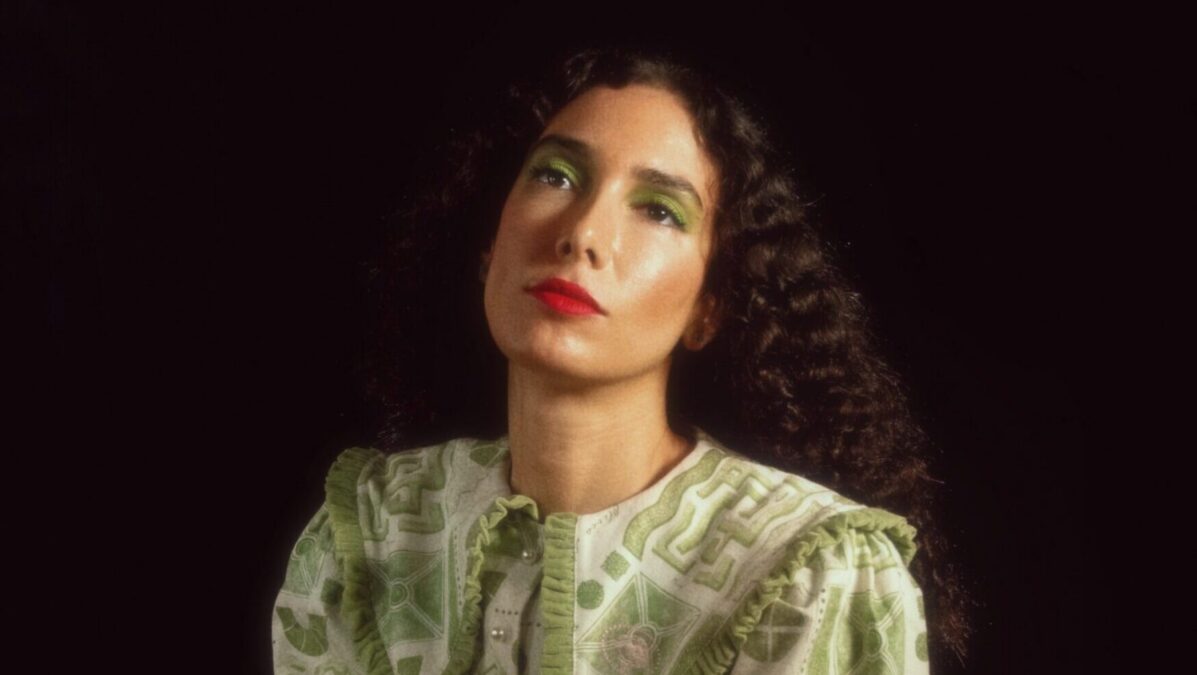
Bedouine
Other Delights
Sat, November 14, 2026
Doors: 7:30 pm
the atlantis
Washington, DC
Tickets are non-transferable until 72 hours prior to the show time. Any tickets suspected of being purchased for the sole purpose of reselling can be cancelled at the discretion of The Atlantis / Ticketmaster, and buyers may be denied future ticket purchases for I.M.P. shows. Opening acts, door times, and set times are always subject to change.
Bedouine

As a child, if you’re lucky, summer afternoons stretch out like a yawn, pool waves are as warm
and engulfing as a blanket, the safety of your mother’s arms feels endless. On her new album,
Neon Summer Skin, Bedouine, the project of Azniv Korkejian, explores this feeling of safety long
before one can fully understand the concept. Written with vivid, honest and intimate imagery
after visiting her family in Saudi Arabia, it tells the story of family and upbringing, and mourns
the end of her childhood. There is a singular resonance and newfound heft in this music
previously unheard in Bedouine’s discography.
Bedouine is known for making gentle, lilting folk songs that build fingerpicked guitar melodies
into tsunamis of emotion. Her masterful songwriting and timeless melodies have earned her
praise from publications like Pitchfork, who said her music “boasts a surreal calm and lived in
glow,
” and Rolling Stone, who lauded her “humble folk-pop brilliance,” plus an NPR Tiny Desk
Concert, and tours with the likes of Fleet Foxes and Father John Misty.
As personal as her songs have been, they’ve often built upon universal experiences. The writing
here, however, is full of specific memories: a neon swim suit, beads of water dripping down
tangled hair, the blood of a lamb, often sacrificed at Syrian weddings, oozing across the
pavement. “It was the first time I had the inclination to write a record about one main subject
which gave me a clarity and motivation I hadn’t quite had before.”
Bedouine started working on the record after a trip to Saudi Arabia to visit her parents. She
correctly assumed it would be her last one there because her family was retiring to Armenia.
“For my 20s and much of my 30s, I couldn’t sit still,” she says. “I would pack my car and move to
a new place. I was so curious about my own independence that it just didn’t occur to me for the
longest time to mourn the past. But after that trip, I came home and was so devastated. I
couldn’t place the feeling immediately, but as I started writing, I realized I was processing that I
wasn’t ready to stop being somebody’s kid.
Whereas Bedouine’s songs were once marked by their gentle acoustic guitar work, she
intentionally returned to the instruments she played as a child while making this record. “My
first instrument was piano that I begrudgingly practiced daily due to my mom’s militant
approach,” she jokes. “My second instrument was trumpet, which I started in elementary
school. For the album, I used a handful of valved brass instruments that I could translate my
knowledge of trumpet onto (valved trombone, tuba.) I’m proud of playing most of the
instruments on the title track — it feels like a true expression of what I was feeling and a sonic
culmination of my childhood.” The record also features whipping flute solos, swooping string
arrangements, and organ.
She co-produced most of the songs with her longtime collaborator, Gus Seyffert, and wrote with
the sweet pop melodies of Todd Rundgren, Karen Carpenter, and Carole King in mind. She also
worked on a couple of tracks with producer Jonathan Rado with Michael and Brian D’ Addario of
the Lemon Twigs. “It was important to me to try to approach some of the production of this
record a little differently, just to try something new,
” she says. The result is a fuller, more playfulsound, at times grand and orchestral, shimmery and surreal, inflected with bits of psychedelia,
bossa nova, and jazz.
Album opener “On My Own” is a contemplative piano and drum ballad that eulogizes her
childhood memories while also lightly paving a path forward. “I should be glad / or should I feel
free? / from all the distant memories / on my own again” she wonders. The song is about, “The
chatter in the halls, being witness to the constant fighting between my brothers, but more than
anything the feeling of belonging to somebody,
” she says. “On My Own” isn’t entirely wistful
though. The ending guitar melody beautifully wanders and flutters, like a mind imagining a new
future. Airy, bossa nova-inflected track “Na Na Na” builds on that idea that we are responsible
for giving our own lives meaning, even as we mourn versions of ourselves that no longer exist. A
horn twinkles and a synth cascades as Bedouine reassures, “Something’s happening, always.”
While working on the record, Bedouine realized the pain of displacement, of searching for
home, has been a throughline in her family history. Other relatives have also experienced this
sense of loss as they’ve migrated between Armenia, Syria, and Saudi Arabia. “I felt so frustrated
about the places that I’m from becoming war torn or difficult to return to,
” she says. “My family
has been split apart time and time again.” This realization prompted her to document and
honor her parents’ lives and stories. On a family trip to Houston, Bedouine recorded a
conversation with her mother and sampled the introduction to “Canopies.” The song tells the
story of her mother’s time in an orphanage. She was put there by her own mother as a way of
escaping her abusive father. Nearby, her mother would sing about feeling her daughter’s
essence in the air: “The waves of Beirut’s beaches flutter, and how sweetly they blow my
darling’s air.” It’s a story of profound yearning told with the quiet profundity of a flower
blossoming.
“Everyone is older now,
” Bedouine croons on the title track as a lonesome horn broods and
meanders. The sun has bleached the plastic on the playground. The home that once held the
comforts of belonging exists mostly in the realm of imagination now.
And yet. “Tucked into her room, heavy as my hands, my sleepy daughter,
” Bedouine sings.
“Never thinking once of her safety, only twilight in the water.
” Life persists. It begins again. In
that sense, this record is one of hope as much as it is one of loss. It is searching for home and
building it within yourself, again and again.
Other Delights
Venue Information:
The Atlantis
2047 9th St NW
Washington, DC, 20001
https://theatlantis.com/