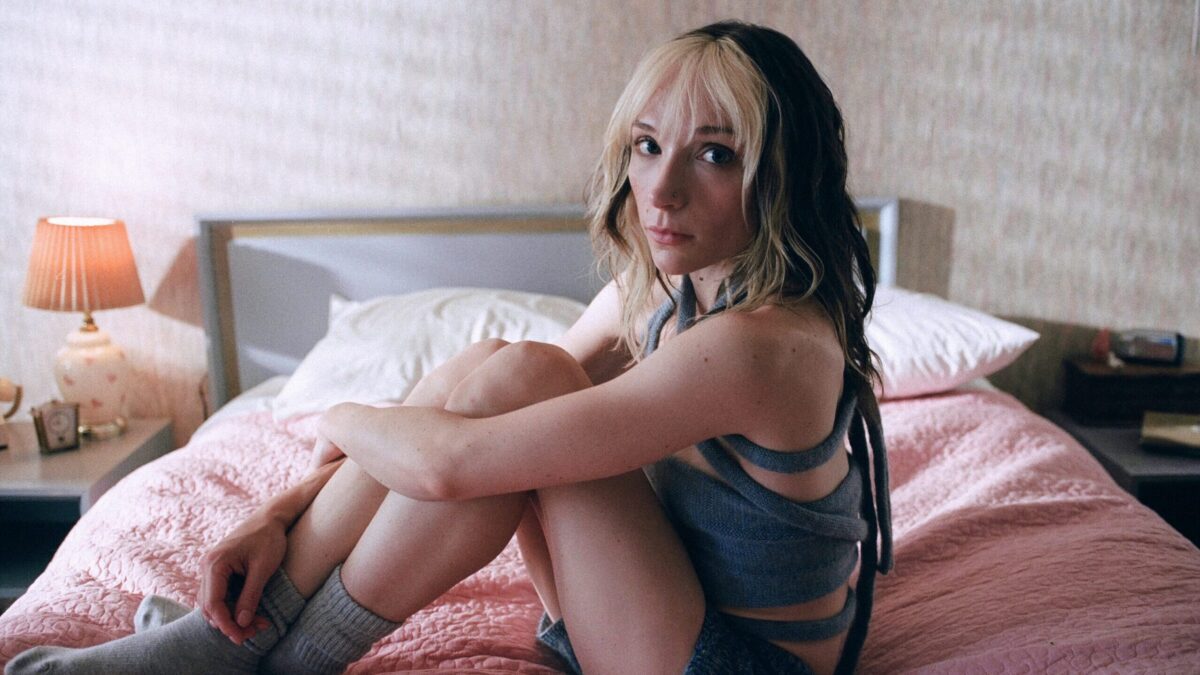
Flower Face
Sat, March 13, 2027
Doors: 7:00 pm
the atlantis
Washington, DC
Tickets are non-transferable until 72 hours prior to the show time. Any tickets suspected of being purchased for the sole purpose of reselling can be cancelled at the discretion of The Atlantis / Ticketmaster, and buyers may be denied future ticket purchases for I.M.P. shows. Opening acts, door times, and set times are always subject to change.
Flower Face

As far back as her debut singles on Bandcamp, Ruby McKinnon approached music the way a blacksmith forges a sword: with thunderous blows of a hammer and searing flame. Whether cruel heartbreak or her own battles with illness, the brilliant songwriting mind behind Flower Face learned that she could draw magic out of the most painful moments. And on new album Kill The Muse (due January 22nd), McKinnon confronts that self-destructive creative mythology head-on.
The album’s songs may originate from bad relationships, rough nights out, substances, and emotional wreckage, but through refining and recording, the Montreal artist learned not only to transform the chaos into something deeper but to change her life. “At what point is it no longer worth it?” she asks. “My body and my heart have carried me through things in my life that have felt unsurvivable, so why am I betraying myself, betraying my body and heart by doing things that hurt me so much?” Across pained indie rock, dream-pop scope, folk intimacy, and flickers of new wave, Kill The Muse turns those questions over with startling honesty, the sound of an artist realizing her artistic forge can produce tools of growth and transformation just as well as swords.
McKinnon wrote most of these songs while working in the studio for Girl Prometheus, Flower Face’s 2024 album centered on a breakup. And after she’d exhausted the well of pain from that experience, McKinnon felt a need to fill it back up. “I felt like, ‘I’m still feeling so creative, so how about I go put myself in some really bad situations so I can be inspired,” she says. “‘I need to damage myself further in order to create more.’ No matter what I did, or how much I hurt myself, it all felt worth it if I could get a song out of it.” In the year-plus between writing and returning to the studio, though, that justification started to feel less convincing.
Lead single “Bad Dream” builds most directly from that self-analysis. Much like Girl Prometheus, the track draws from a broken relationship, but this time as if through a dreamy haze. Gauzy washes of guitar drape around McKinnon’s whisper-echo vocals, the percussion skipping behind like a fluttering heartbeat. Much like her own revelation that she needed to break free from the self-destructive pattern, the song builds through pain points to a glowing realization. “I love you most when you’re sleeping/ Cause when you wake up it all falls apart,” she sighs, realizing that this was never a real connection but rather an illusion, a crutch.
That concept of relying on something you no longer need truly sets the tone, McKinnon realizing she needs to kill the proverbial muse. “I’ve always found it easy to write about heartbreak and self-destruction. I’ve been doing that for 14 years,” McKinnon says. Prior to releasing her first music as Flower Face, McKinnon had already been intimately familiar with what the life of an artist looked like. Her father worked at a local radio station, and she would tag along to concerts and interviews as a child. McKinnon began training in classical piano and then taught herself guitar, recording lo-fi songs in her bedroom and releasing them on Bandcamp. Life changed again when she was diagnosed with stage three cancer at just seventeen—and when she fought through and reached remission, McKinnon felt affirmed that music would be her central focus. “It’s what I love to do, and when I realized I could literally die at any moment, I could no longer imagine doing anything else,” she says with a powerful clarity.
With each successive album receiving adoring responses, that decision looks more right—but it also continued to be a cycle fueled by pain. “By relying on this crutch of the self-destructive cycle, I was actually limiting myself and not allowing myself to grow as an artist and be challenged,” McKinnon adds. “With this album, I’m opening wounds that I’ve previously avoided. If I want to grow as an artist, I have to learn how to write when I’m in a better place, too.”
Sometimes progress on that journey can be made merely by knowing you’re making bad decisions but making them anyway. Second single “Better the Devil” feels like looking around from the bottom of a bottle, to find that everyone has moved on, not just your lost love. “All my friends are getting sober/ I guess that means I’m drinking alone,” McKinnon delivers, her vocals crossing the speakers like a chilly wind. And the solution? “Call a man who hates me, let him hold me/ Better the devil that already knows me.” Suddenly, the racing fingerpicked guitar is battered down by a swell of anxious violin and thunderous distorted bass, the weight of the bad choices overwhelmed only by the awareness of them. “A couple of years ago, a bunch of my friends decided they were going to try sobriety for six months, and I was living alone and definitely not joining in on that effort, so I started to feel very alone,” she says. “The night I wrote this song, I was walking home in the snow, and a friend told me she was going to see her (terrible) ex-boyfriend instead of coming over. Once I got home, this demo just came out. It was the worst time of year, the sun set at 4PM, and most nights I was just counting down the minutes until it was acceptable for me to lie down in bed and go to sleep.”
The self-aware evolution of these songs comes, in part, from recording vocals for Kill the Muse in the same lakeside cottage studio where she’d recorded Girl Prometheus. “The more I sang these lyrics, the more I was forced to reckon with myself,” McKinnon recalls. “The last time I was at this cottage, it was fall, and I spent every morning watching the sunrise with a coffee and a blanket on the dock, just crying and feeling so full of love for the world. And then at the end of recording, I threw a party with all my friends. I was holding on to that experience. This time it was later in the year, two feet of snow everywhere, and all clouds. There wasn’t a single sunrise the week I was there. And I just broke down. I was like, ‘I have been dishonest with myself and my experiences, and because of that, I’m not getting the sunrises that I wanted. It’s my fault that the sun’s not coming out.’ My friend Summer reminded me I can’t force life to be the same as it was. You can’t write the story before it happens.” That conversation helped McKinnon reach the creative realization that painful moments aren’t a tool to live for to reach the sunrise, but instead something that can be recognized, recontextualized, and let go. “If those sunrises were a reflection of the last album, of getting through heartbreak and finding beautiful experiences with myself and with my friends, then these cloudy mornings are a reflection of this album, of feeling stuck in this hopeless place. I can still sit on the dock with my coffee and look at the wall of gray clouds, and if there’s a single flicker of sunlight, I will be here to see it.”
“Life’s So Boring” perfectly encapsulates that duality, sinking into the blur of pointless parties, substances, and lovers. There’s such a jolt of recognition in hearing McKinnon cry out that “nothing hurts like it used to,” the paradox of explaining how deadened her responses have become to these awful moments while also coloring the song in such powerful shades of sonic bruise. Strings and bass ripple into place like a gothic staircase around her falsetto, McKinnon climbing through a rippling electric guitar solo to realize that the only thing that still hurts is “just you.”
Elsewhere, “Paralyzed” builds from a glitching sample like a half-remembered melody, a tender moment exploding into shreds of guitar and drum fills only to fall back in on itself and start again—the cycle of pain “start[ing] over one more time.” The icy “Party Trick”, meanwhile, finds McKinnon at her most fragile, her voice quavering as she tries to claw herself back from being consumed by an ex, by people at a party, by anyone at all. And on the orchestral sway of “Sunsick”, she lashes out at “televised romance” and a “halo of red wine and ash” left behind. “I joked that it was my Disney song, talking about how trying to live inside some beautiful fantasy is making me sick,” she laughs. And then there’s the haunting “Something I Can Never Have”, McKinnon’s first time putting a cover on an album, spinning the Nine Inch Nails original between haunted music box and explosive lurch.
Through it all, Kill The Muse isn’t about abandoning the darkness that made McKinnon such a compelling songwriter. It’s about refusing to let it define her, acknowledging it for what it is and then looking for the depth of life around it. And in so doing, understanding that she can move beyond it. “My life looks very different now, but even if that party is over, that doesn’t mean there won’t be new stories to tell,” McKinnon says. She may have killed this particular muse, but McKinnon has instead built a new creative language, one with more colors, textures, and possibilities than the palette of heartbreak and self-destruction she’d previously relied on. Now she knows who she can become. The sword remains—but now she gets to decide what to do with it.
Venue Information:
The Atlantis
2047 9th St NW
Washington, DC, 20001
https://theatlantis.com/